AI root cause analysis
Get the root cause of every alert
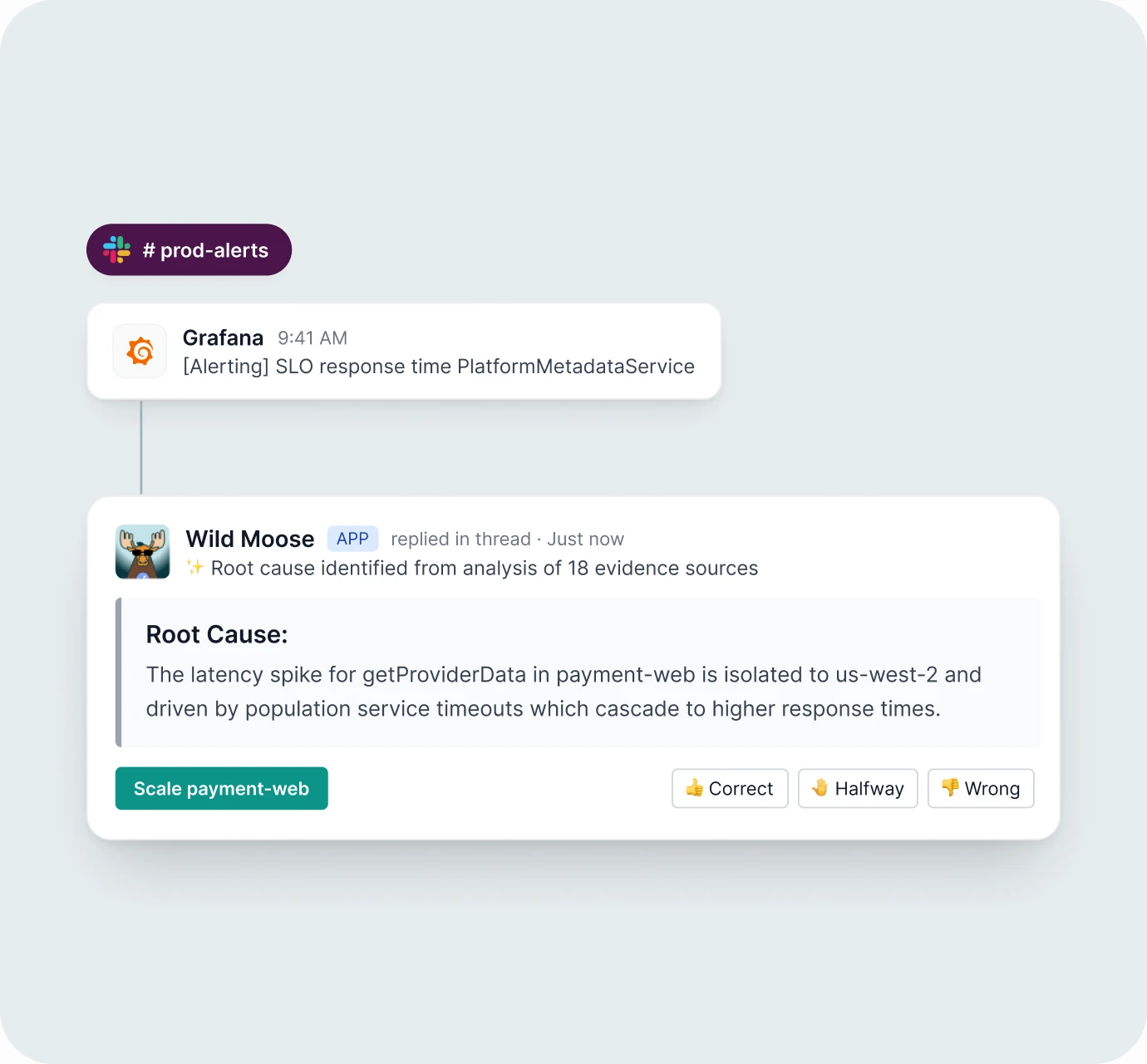
Wild Moose automatically runs the checks your senior engineers would, investigating every production alert and posts the root cause, evidence, and next steps in your alert channel.
Trusted by leading AI engineering teams


Get answers before opening any dashboard
Within 60 seconds of an alert, Wild Moose replies with the root cause, the evidence, the impact, and the next step.
Concise root cause
What failed and why, in a few sentences you can act on.
Recommended next step
What to do now, like scaling the affected service.
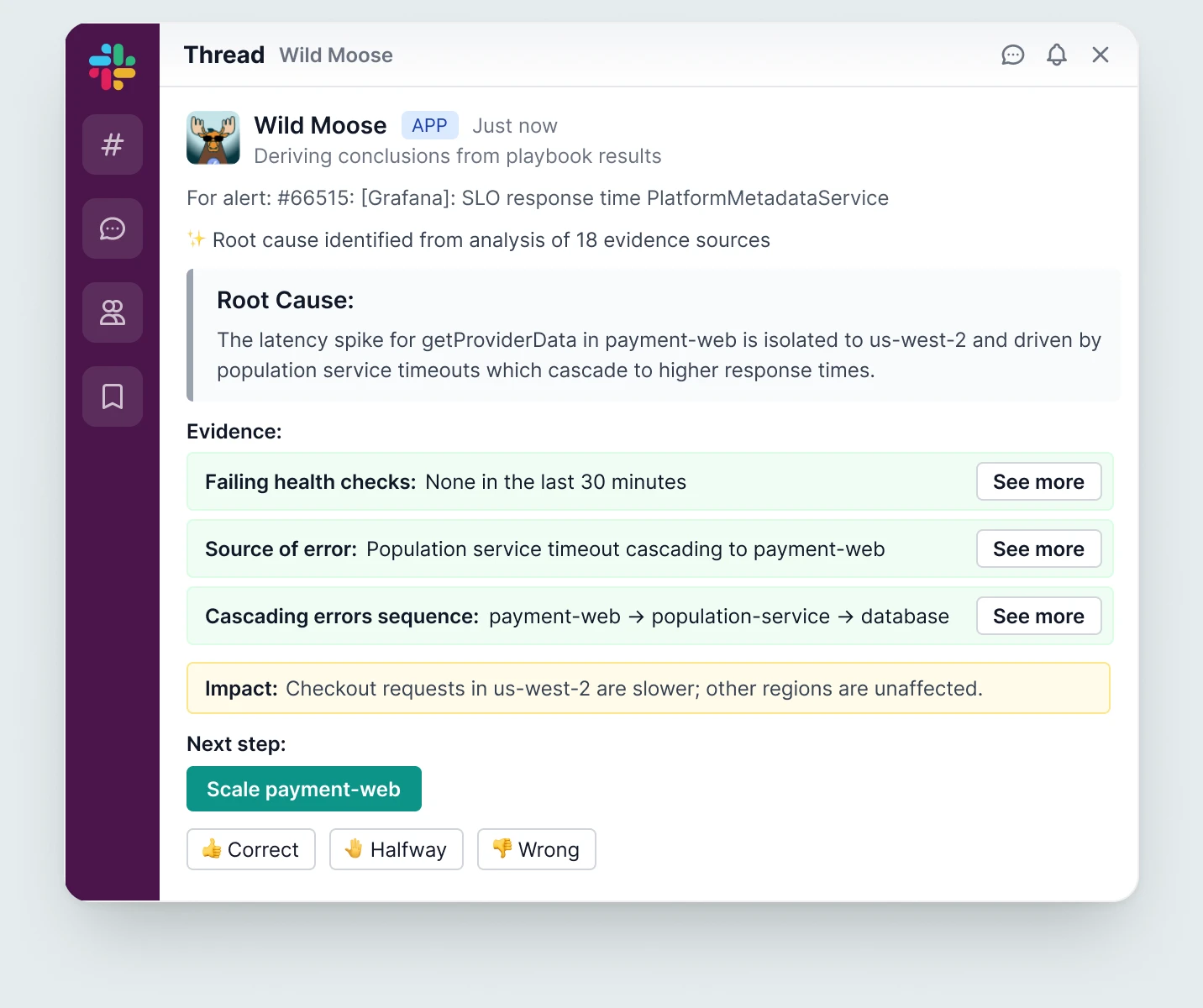
Supporting evidence
Every query behind the answer, with a link to its raw result.
Impact and urgency
Which services and users are hit, so you know how fast to act.
Alert enrichment your team can audit and steer
Wild Moose does the heavy lifting on every alert, so your engineers only step in to check or adjust.

Auditable end to end
See every query the agent ran, its result, and the evidence behind it.

Feedback in context
Mark an answer Correct, Halfway or Wrong in the thread where it arrived.

Agents managed as code
Each investigation is code your team can read, version, and review.

Built for speed
Checks run in parallel, so most answers land in under a minute.

Steerable investigations
Choose what the agent checks and how the answer reads, per team or alert.

Predictable token cost
Most steps are fixed code, so cost per investigation stays low and steady.

“Wild Moose had the most mature approach for automating tribal knowledge. The responsiveness in tuning and adapting the solution made it clear this was the right partnership.”

Aviva Peisach
Head of Server Engineering at Wix
50%
Reduction in MTTR
>80%
Root cause accuracy
A fleet of agents, built around your environment
No cleanup first. Wild Moose reads your telemetry, runbooks, and past incidents, then builds an agent for each kind of alert and tests it before it goes live.
Finally, an AI SRE you can predict and control
Costs don't climb with alert volume, and agents stay current through changes your team approves.

Investigations built for your stack
Each micro-agent is code for one kind of alert. Most steps are fixed and cost nothing.
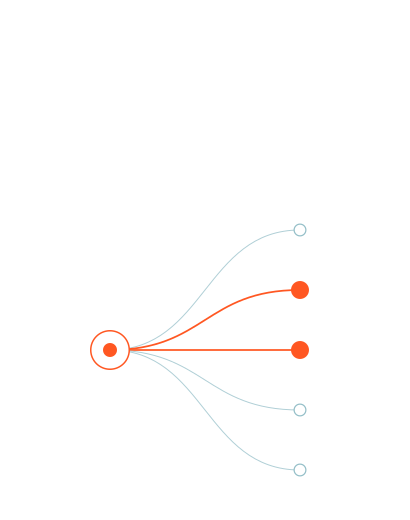
Precise routing to the right agents
The Orchestrator picks the micro-agents that fit the issue and runs them in parallel.
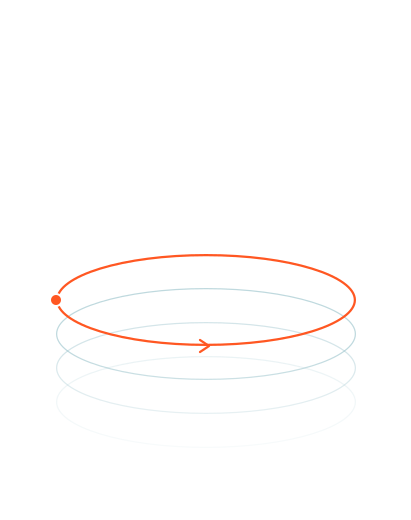
Regression-tested changes
Chew, the learning layer, tests each fix on your past incidents before review.
Questions SRE teams ask
What is AI alert investigation, and how does Wild Moose work?
AI alert investigation uses artificial intelligence to automatically investigate production alerts, identify their root cause, and recommend next steps. Wild Moose runs the same diagnostic queries your experienced engineers would run across logs, metrics, traces, and other production data. Its AI SRE micro-agents, coordinated by an orchestrator that applies AI reasoning where each investigation needs it, deliver an evidence-backed root cause directly in Slack or Microsoft Teams.
What is an AI SRE?
An AI SRE is an AI system that performs site reliability engineering work, such as investigating alerts, diagnosing incidents, and recommending fixes, that would otherwise require an on-call engineer. Wild Moose is an AI SRE platform that starts with automated alert investigation and root cause analysis, then goes beyond faster incident response. By investigating production signals at scale and learning from every investigation, Wild Moose identifies recurring issues, helps prevent future incidents, and improves system health over time. This is what Wild Moose calls Autonomous Reliability: an approach where reliability improves continuously and engineering investments are guided by business impact, moving teams from firefighting to prevention.
What are AI SRE micro-agents?
AI SRE micro-agents are small, specialized agents, each built to investigate a specific type of alert in your environment. Unlike one large, open-ended AI agent, each Wild Moose micro-agent follows a defined investigation workflow and can be tested and measured individually. The Wild Moose orchestrator decides in real time when and how much AI reasoning each investigation needs, based on the alert's signals and potential impact. This makes investigations faster, more consistent, and more cost-efficient than general-purpose AI assistants.
How accurate is Wild Moose's AI root cause analysis?
Wild Moose identifies the correct root cause in over 90% of investigations across customers. Each micro-agent is validated before release and promoted to production only after it meets accuracy requirements. After deployment, Wild Moose monitors accuracy continuously and detects and addresses performance drift automatically. Teams can see each agent's accuracy over time.
How long does AI root cause analysis take?
Wild Moose typically completes an alert investigation in about 30 seconds, and most finish in under a minute. Its micro-agents run diagnostic queries in parallel, so engineers receive a likely root cause, supporting evidence, and recommended next steps without manually searching through dashboards.
Can Wild Moose investigate every alert, or only critical incidents?
Wild Moose investigates production alerts at every severity level, not just major incidents. Because its micro-agents are lightweight and token-efficient, Wild Moose can investigate thousands of alerts per day, including lower-priority alerts that engineers often ignore. Teams can start with selected alert types and expand coverage over time.
How is Wild Moose different from Datadog and other AI observability tools?
Wild Moose investigates alerts across your entire production stack, while AI features built into observability platforms focus primarily on data within their own product. Wild Moose works on top of tools like Datadog rather than replacing them. It combines their signals with your team's diagnostic knowledge and runs investigations through tested micro-agents tailored to your environment. The result is fast, repeatable root cause analysis, not just a chat interface over your telemetry.
What tools does Wild Moose integrate with?
Wild Moose integrates with the observability, alerting, infrastructure, and collaboration tools engineering teams already use. These include Datadog, Grafana, Prometheus, New Relic, Splunk, AWS CloudWatch, and OpenTelemetry for observability; PagerDuty and Opsgenie for alerting; Kubernetes, AWS, and GCP for infrastructure; and Slack, Microsoft Teams, Jira, and GitHub for collaboration.
How does Wild Moose investigate issues across multiple services?
Wild Moose runs diagnostic queries across every connected data source to trace failures between services and pinpoint where a problem originated. Its micro-agents examine dependencies, correlate telemetry, and separate the underlying cause from downstream symptoms, even in complex microservices environments.
Can engineers verify how Wild Moose reached a conclusion?
Yes. Every Wild Moose investigation shows the queries it ran, their results, and the supporting evidence, with links back to the original data sources. Engineers can inspect each step and verify the conclusion in the observability tools they already trust.
What happens if Wild Moose identifies the wrong root cause?
If Wild Moose gets a root cause wrong, engineers can flag it directly, and that feedback is used to correct the micro-agent. Teams can also edit the context micro-agents use for fine-grained control, or let Wild Moose learn automatically from production outcomes, Slack conversations, and Jira tickets. Every change is validated and tested before it reaches production.
What can trigger a Wild Moose investigation?
Wild Moose investigates production alerts automatically, and investigations can also be triggered by deployments, configuration changes, scheduled checks, or manually by engineers. During active incidents, Wild Moose can join war rooms to support deeper, coordinated investigation. This lets teams investigate proactively, not just when something breaks.
How long does it take to set up Wild Moose?
Wild Moose generates draft micro-agents within hours of connecting to your production data. Teams then release agents gradually as each one meets accuracy requirements, typically reaching over 80% coverage of all alerts within a couple of weeks. The platform shows each agent's performance throughout rollout, so teams can build trust before expanding coverage.
Do we need to clean up our alerts or data before getting started?
No. Wild Moose works with your existing alerts, production data, and observability tools as they are. It builds micro-agents tailored to your environment without upfront data cleanup or extensive manual configuration.
Can Wild Moose automatically fix production issues?
Yes, with human guardrails. Wild Moose can identify the root cause, generate a recommended fix, and offer it through an action button in Slack or Microsoft Teams. Engineers can review and run the fix with one click, or connect Wild Moose to an approved internal AI agent or automation system to run it automatically. Teams control which actions are allowed and how much human approval each requires.
Is Wild Moose secure?
Yes. Wild Moose is SOC 2 Type II compliant and connects to your production systems through read-only integrations. It queries data on demand without storing raw logs, and your data is never used to train AI models. Wild Moose also supports deployment configurations that meet enterprise security requirements, including running AI models within your own AWS environment. Full details are available on the Wild Moose security page.
How is Wild Moose priced?
Wild Moose uses flat annual pricing, so costs stay predictable no matter how many alerts you investigate. This is possible because the Wild Moose orchestrator decides in real time how much AI reasoning each investigation needs, based on the alert's signals and potential impact. Routine checks run efficiently, and deeper AI analysis is applied where it adds the most value, so Wild Moose uses far fewer tokens than running every investigation as a large, open-ended AI session.